Pantacor Hub now ships with a proper documentation site, served straight from the Hub at hub.pantacor.com/docs. It is built with VitePress from the open-source UI repository, has full-text search (Ctrl K), light and dark themes, and is organized into four cross-linked sections.
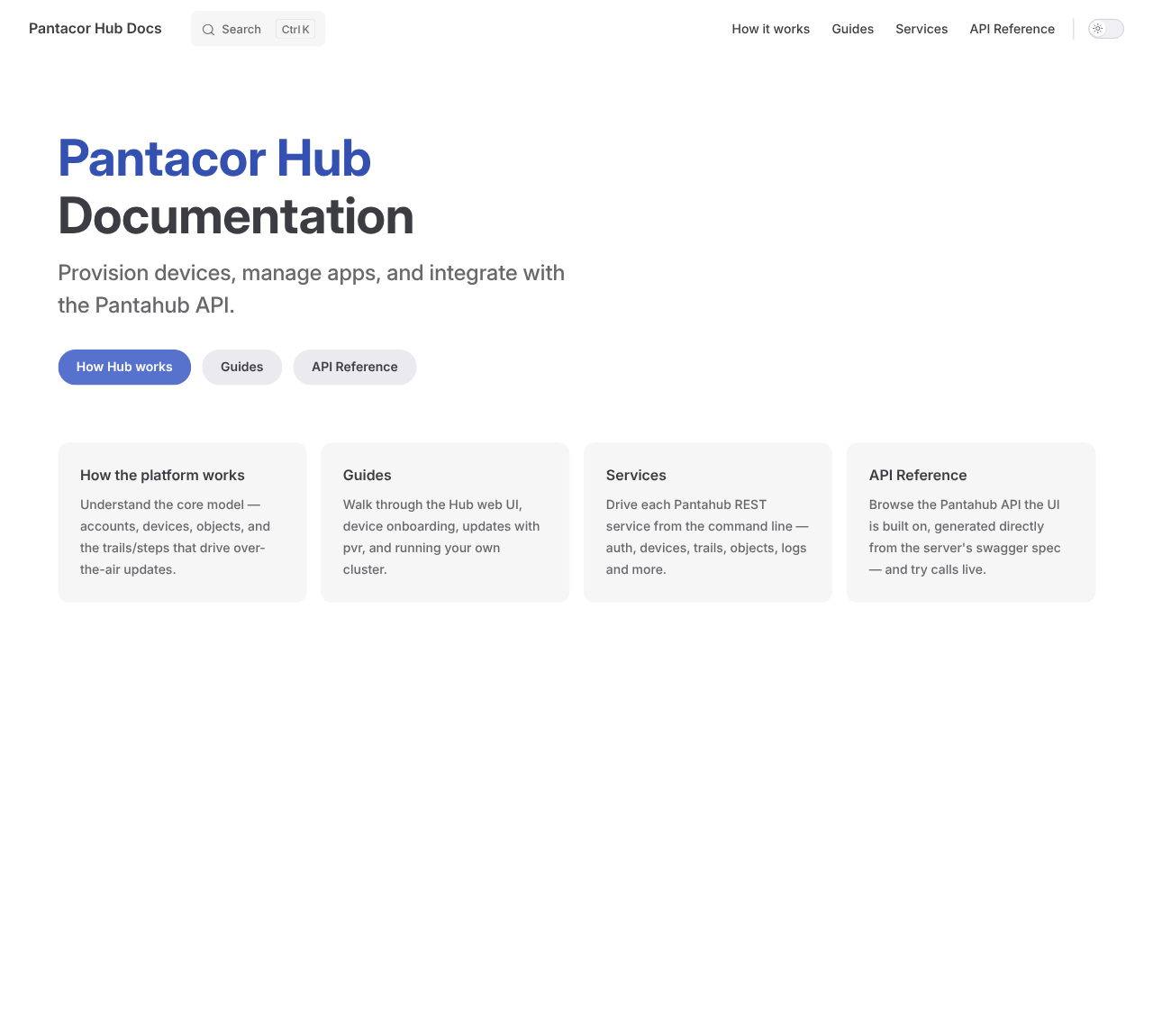
How the platform works
The concepts section explains the core model behind the Hub — accounts, devices, objects, and the trails/steps mechanism that drives over-the-air updates. If you have ever wondered what a “step” actually is or how a revision travels from pvr post to a device, start here.
Guides
Task-oriented walkthroughs of the Hub web UI and the workflows around it, with inline diagrams:
- Onboarding — how onboarding works, claiming a device, auto-join tokens, and TLS onboarding.
- Devices and updates — starting a new device, deploying updates, and working with
pvr. - Apps & content, settings, tokens, and the recently added two-factor & passkeys and webhooks guides.
Self-hosting — yes, really
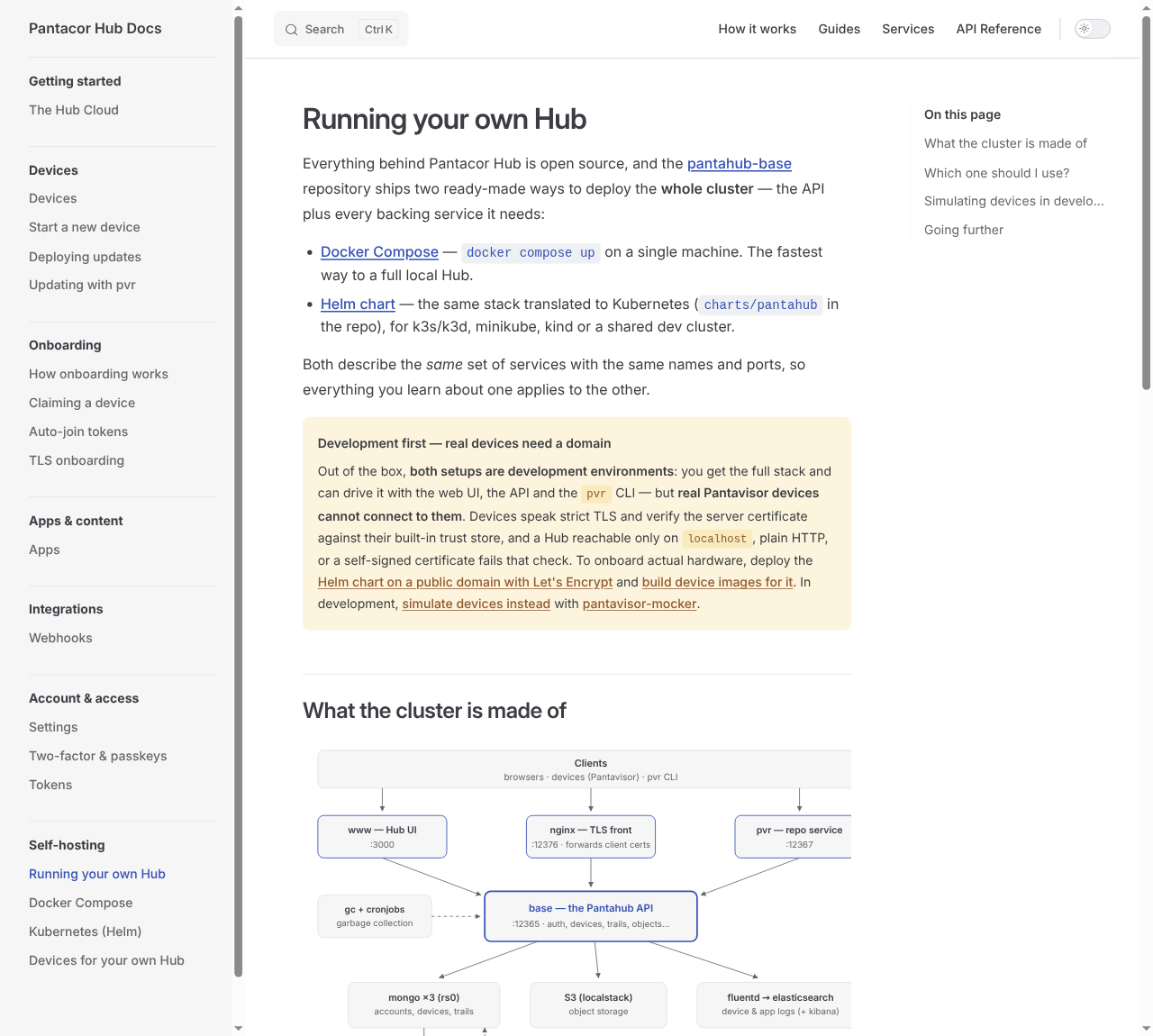
A question that has come up on this forum more than once (“is there an up-to-date way to self-host pantahub-base?”) finally has a documented answer. The Running your own Hub section covers the whole open-source cluster:
- Docker Compose —
docker compose upfor a full local Hub on a single machine. - Helm chart — the same stack on Kubernetes (k3s/k3d, minikube, kind or a shared cluster), including deploying on a public domain with Let’s Encrypt.
- Devices for your own Hub — building meta-pantavisor images that point at your custom domain.
- pantavisor-mocker — simulating fleets of devices against your dev cluster without hardware.
Services
One page per pantahub-base REST service — auth, devices, trails, objects, logs, apps, metrics and more — each walking the request flows with copy-paste curl commands and endpoint tables that link into the API reference.
Live API reference
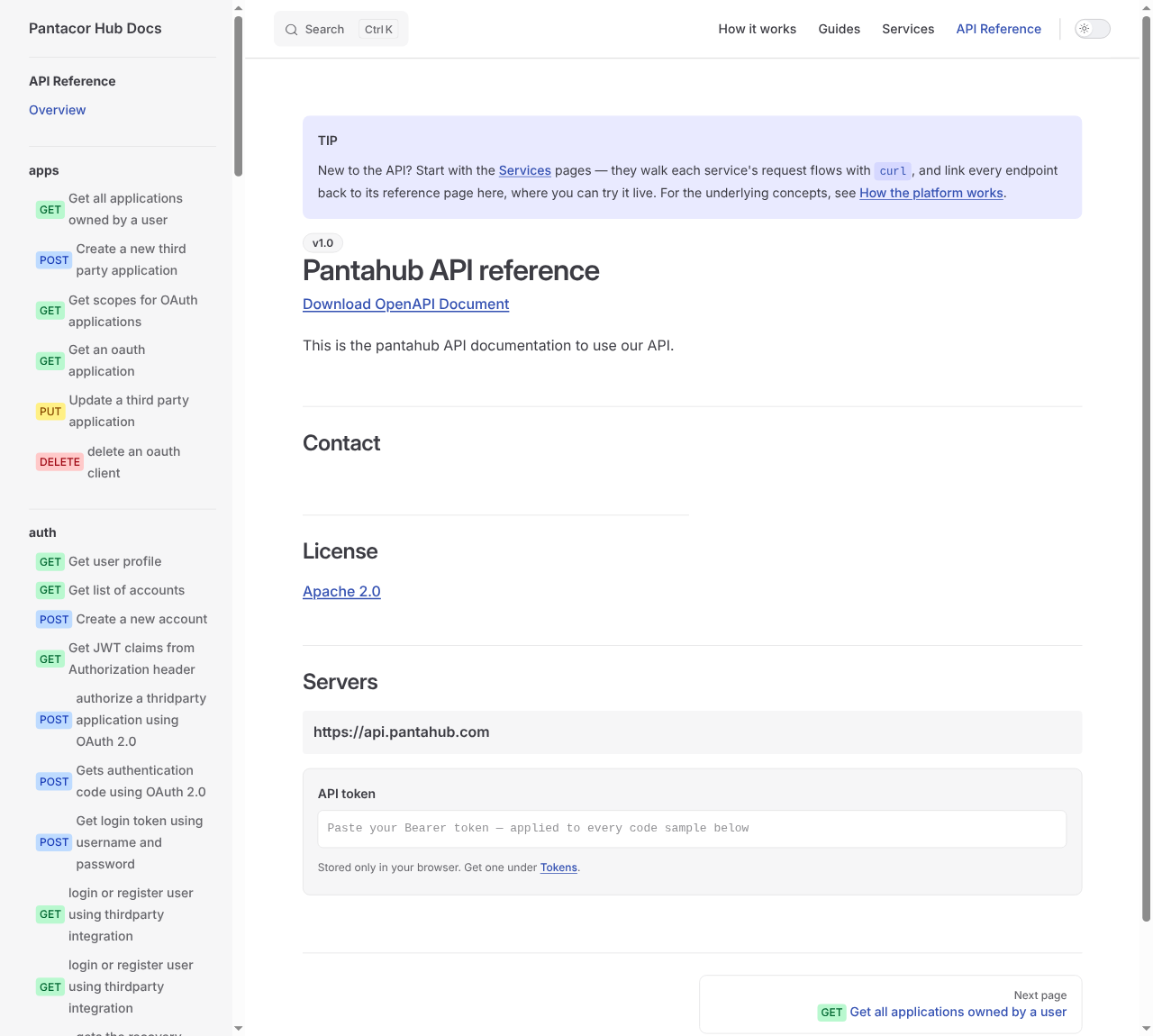
The API reference is generated directly from the server’s swagger spec, so it cannot drift from what the API actually does — and it is interactive: paste a Bearer token (stored only in your browser) and every code sample on the site becomes runnable against api.pantahub.com. You can also download the OpenAPI document and point your own tooling at it.
Have a look
Start at hub.pantacor.com/docs. The site lives in the open-source UI repository, so if you spot a gap or a mistake, issues and merge requests are very welcome — and if there is a guide you wish existed, tell us below.